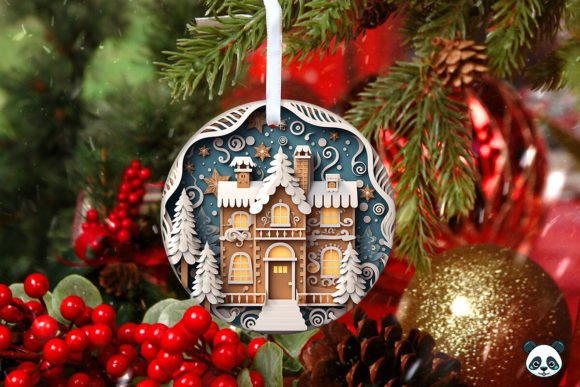
Creating Festive Decor with a Gingerbread House 3D Christmas Ornament Sublimation Design
The holiday season is defined by traditions, and few symbols evoke the warmth of Christmas quite like the gingerbread house. In recent years, the craft of sublimation printing has allowed creators to translate this classic imagery into durable, vibrant, and three-dimensional keepsakes. Utilizing a Gingerbread House 3D Christmas Ornament design offers a unique opportunity for hobbyists, small business owners, and DIY enthusiasts to produce professional-grade decorations that stand out on any tree. This guide explores the intricacies of working with digital sublimation files, the technical considerations for 3D ornament wraps, and the practical applications of these designs in modern crafting.
Understanding the Mechanics of 3D Ornament Sublimation
Sublimation printing is a process where heat and pressure are used to transfer dye onto materials such as polymer-coated metals, ceramics, or specific plastics. Unlike traditional inkjet printing, the ink turns into a gas under heat and bonds with the substrate at a molecular level. When applied to a 3D Ornament wrap, this technique requires precise alignment and high-resolution graphics to ensure the final product looks seamless from every angle.
A Gingerbread House 3D Christmas Ornament Background or wrap design is specifically engineered to fit the curvature of spherical or bulb-shaped ornaments, typically ranging from 2.75 inches to 3.5 inches in diameter, though templates exist for various sizes including the popular 15 Oz Ornament Template style adapted for smaller decor. The challenge lies in distorting a 2D image so that it appears correct when wrapped around a 3D object. Professional designers create these Ornament Wrap PNG files with pre-calculated distortion maps. When a creator downloads an Instant Digital Download PNG, they are receiving a file that has already accounted for the optical illusions caused by curvature, ensuring that the gingerbread walls, roof, and candy details do not look stretched or warped once applied.
The Importance of Resolution and File Formats
Quality is paramount in sublimation. A standard requirement for professional results is a resolution of 300 DPI (dots per inch). When purchasing a Gingerbread House png or a full wrap template, verifying the DPI is crucial. Lower resolution images may appear pixelated or blurry when printed, especially on glossy surfaces where imperfections are easily visible. The included PNG File 5 in x 5 in mentioned in many digital listings is optimized for this density, providing enough data points to render crisp lines for the icing details and textured looks of the gingerbread.
Furthermore, the PNG format is preferred over JPEG for sublimation because it supports transparency. This is particularly useful for Ornament Sublimation Design elements that need to be layered over different background colors or patterns. For instance, a creator might want to place a Gingerbread House watercolor element onto a red or green background without a white box surrounding the image. The alpha channel in a PNG allows for this flexibility, making the Digital Download versatile for various creative projects beyond just the standard white ornament.
Design Aesthetics: From Watercolor to Seamless Patterns
The visual style of the Gingerbread House design plays a significant role in the final appeal of the ornament. Contemporary trends favor a mix of nostalgic and modern aesthetics. A Gingerbread House watercolor style offers a soft, hand-painted look that mimics traditional illustration, appealing to those who prefer a rustic or vintage Christmas theme. These designs often feature bleeding edges and soft gradients that translate beautifully through the sublimation process, which is known for its ability to reproduce photorealistic color ranges.
Conversely, some creators opt for a Gingerbread House seamless pattern. This approach involves tiling the graphic so that it repeats perfectly without visible seams. When applied to a 3D background or a full wrap, a seamless pattern creates an immersive effect where the gingerbread motif covers the entire surface continuously. This is particularly effective for Gingerbread House skinny Ornament shapes or taller baubles where a single central image might leave too much negative space. The use of a seamless pattern ensures that no matter how the ornament hangs or rotates, the design remains consistent and engaging.
Additionally, the concept of a 3D design in this context often refers to the visual depth created within the flat file. Through shading, highlights, and perspective, a Gingerbread House 3D Christmas Ornament graphic can make the house appear as if it is popping off the surface of the bauble. This illusion of depth adds a tactile quality to the visual experience, enhancing the perceived value of the handmade item.
Practical Workflow for Creators and Businesses
For educators, researchers in craft technology, and business owners, understanding the workflow from Digital Download to finished product is essential. The process begins with acquiring the correct Ornament wrap template. Once the ZIP file is downloaded and extracted, the user must prepare their sublimation printer. It is vital to mirror the image horizontally before printing. Since the design will be wrapped around the ornament, failing to mirror the Ornament wrap sublimation file will result in reversed text or asymmetrical features facing the wrong direction.
After printing on high-quality sublimation paper, the next step involves wrapping the print tightly around the blank ornament. Specialized heat-resistant tape is used to secure the paper, ensuring no gaps exist between the paper and the substrate. Any air pockets can lead to ghosting or blurred areas in the final 3D Ornament sublimation result. The assembly is then placed in a convection oven or a specialized ornament press. Temperature and time settings vary by manufacturer but generally hover around 360-400 degrees Fahrenheit for several minutes.
Upon removal and cooling, the paper is peeled away to reveal the transferred image. The result is a permanent, fade-resistant decoration. For business owners selling these items, the ability to offer a Gingerbread House Ornament wrap that looks professionally manufactured rather than home-stickered is a key competitive advantage. The high fidelity of a 300 DPI Sublimation Design allows for premium pricing and customer satisfaction.
Versatility Beyond the Standard Bauble
While the primary use case is the spherical Christmas ball, the assets provided in these digital packs often have broader applications. A Gingerbread House background can be utilized for scrapbooking pages, holiday card fronts, or even website banners during the festive season. The Gingerbread House wrap graphics can be resized and adapted for other substrates compatible with sublimation, such as tumblers, coasters, or puzzle pieces, provided the resolution holds up at the new size.
Educators teaching digital arts or vocational training in printing technologies can use these files as case studies. They demonstrate the relationship between 2D design constraints and 3D physical outcomes. Students can experiment with how different 3D Ornament wrap distortions affect the final perception of the image, gaining valuable insights into spatial reasoning and graphic design principles.
Technical Considerations and Best Practices
When working with 3d Ornament Wrap files, color management is a critical factor. Sublimation printers often produce colors that differ slightly from what is seen on an RGB monitor. Professionals should utilize ICC profiles specific to their printer, ink, and paper combination to ensure the warm browns of the gingerbread and the bright whites of the icing match the intended Gingerbread House png preview. Without proper color profiling, the "Gingerbread" might appear too orange or the snow too gray.
Another consideration is the type of blank ornament used. Not all ornaments are suitable for sublimation; they must have a polymer coating. Aluminum blanks are the industry standard for 3d Ornament projects due to their durability and excellent color vibrancy. Using uncoated glass or plastic will result in the ink wiping off immediately. Therefore, sourcing high-quality blanks is just as important as selecting a high-quality Ornament wrap template.
Safety is also a component of the workflow. The heating process involves high temperatures, requiring appropriate personal protective equipment such as heat-resistant gloves. Furthermore, adequate ventilation is necessary when operating sublimation ovens to avoid inhaling any fumes, although modern sublimation inks are generally considered safe when used as directed.
The Economic and Creative Value of Digital Assets
The market for Instant Digital Download crafting assets has grown exponentially. For the consumer, buying a Gingerbread House 3D Christmas Ornament design file is cost-effective compared to purchasing pre-made ornaments, especially when producing in bulk for gifts or sales. For the creator, it eliminates the need for advanced illustration skills while still allowing for customization. One can take a base Gingerbread House seamless pattern and add personalized names or dates using graphic editing software before printing.
This democratization of design allows for a wide variety of styles to enter the marketplace. We see everything from hyper-realistic 3D design interpretations to whimsical, cartoonish versions. The availability of specific niches, such as a Gingerbread House skinny Ornament template, caters to diverse decorating trends where non-traditional ornament shapes are becoming increasingly popular. This variety ensures that there is a design suitable for every taste, from minimalist modern homes to maximalist traditional displays.
Moreover, the reusability of these digital files adds to their value. A single purchase of a Sublimation Designs pack can yield hundreds of ornaments over multiple holiday seasons. As long as the file is stored safely, the creator has an endless supply of the design, limited only by their inventory of blank ornaments and ink. This sustainability aspect appeals to environmentally conscious crafters who prefer making durable goods rather than buying disposable decorations.
Future Trends in Holiday Sublimation
Looking ahead, the integration of 3D Ornament wrap technology with augmented reality (AR) could redefine how we interact with these objects. Imagine pointing a smartphone at a Gingerbread House 3D Christmas Ornament and seeing an animation play out on the screen. While currently, the focus remains on the physical print quality, the foundational digital assets—the high-res PNGs and vector-based patterns—are the building blocks for such future innovations. The precision required for current 3D background alignments lays the groundwork for more complex interactive overlays.
In the immediate future, we expect to see a rise in hyper-personalized Gingerbread House Ornament wrap designs where AI assists in generating unique variations of the house structure based on user input, all utilizing the same robust Ornament wrap sublimation templates. The core technology, however, remains rooted in the reliable transfer of high-fidelity images onto curved surfaces, a testament to the enduring utility of well-crafted digital design files.
Ultimately, whether for a family project, a school fundraiser, or a thriving Etsy shop, the Gingerbread House 3D Christmas Ornament represents a perfect blend of tradition and technology. By leveraging high-quality Digital Download assets and adhering to best practices in sublimation, creators can produce stunning, lasting memories that capture the spirit of the season in vivid detail.